Kevin Wells has updated another of his handy applications – this time TrainTimes, which now stands at version 2.05.
Read MoreTrainTimes 2.05 released



Kevin Wells has updated another of his handy applications – this time TrainTimes, which now stands at version 2.05.
Read More
Originally given the working title Escape to the Light, with some of its inspiration coming from a strange recording found in a charity shop, the latest AMCOG Games title – Light Gate – is now available to purchase from !Store.
Read More
If you sometimes find your RISC OS desktop a bit cluttered (which speaking personally would make it much like my real desktop) one solution is to close a few windows (or in the case of my actual desk, put some stuff away). Another solution is to run a piece of software that expands the size of the desktop beyond the visible area shown on screen, and move some of your windows into other spaces, ready for access when necessary.
Read More
Receiving a major update from R-Comp, their Genealogy software is now at version 2. The changes make it easier to use, and brings the ability to produce many new charts and diagrams.
Read More
A new version of NetFetch has been released by R-Comp in time for this year’s Wakefield Show, which will take place in Bradford this Saturday – 27th April.
Read More
Following the update to Hexen, released by R-Comp just in time for Southwest 2024, there is now an updated version of Heretic available, just in time for Wakefield!
Read More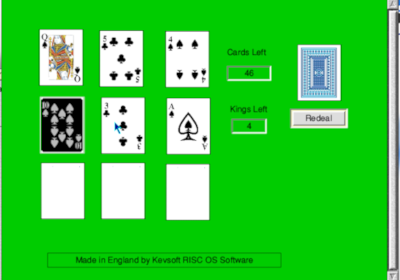
One developer that pops up a lot on RISCOSitory is Kevin Wells, aka Kevsoft, who has a number of applications – which he updates fairly regularly – that make use of APIs from third party websites and online resources, providing a way to access and use information from them on the RISC OS desktop, that might not otherwise be accessible. That isn’t the only type of software he has available, though.
Read More
If you attended the Southwest Show back in February, you’ll know that there was a new release of Hexen from R-Comp, which saw some significant updates over the older version – amongst other things meaning it can now be run on more modern RISC OS computer systems. It seems that the programmer responsible for the updated port of the game, Gerph, has been continuing to improve it, because there is now a new version available – 1.07 – which R-Comp’s Andrew Rawnsley says is a major update.
Read More
Attendees of the recent Southwest Show in Bristol who sat in on one or two of the theatre presentations – or anyone who has subsequently watched the videos of those talks will be aware that Wi-Fi is now a thing for RISC OS – and not only that, but like buses two different versions have arrived; one from RISC OS Developments Ltd (ROD) and one from RISC OS Open Ltd (ROOL).
Read More
Rick Murray recently pranked readers of the RISC OS Open Ltd (ROOL) forums, by posting a screenshot of his RISC OS desktop with an extra icon on the left hand side (where devices sit) depicting a cup of tea.
Read More